
Introduction
When the COVID-19 pandemic swept across the globe in early 2020, countries scrambled to establish mechanisms for a coordinated response. In Pakistan, the government created a unique institution that would become central to managing the health crisis—the National Command and Operation Centre (NCOC).
The NCOC meeting became a term that entered everyday conversation, representing the decision-making hub where Pakistan’s pandemic response took shape.
What is the NCOC?
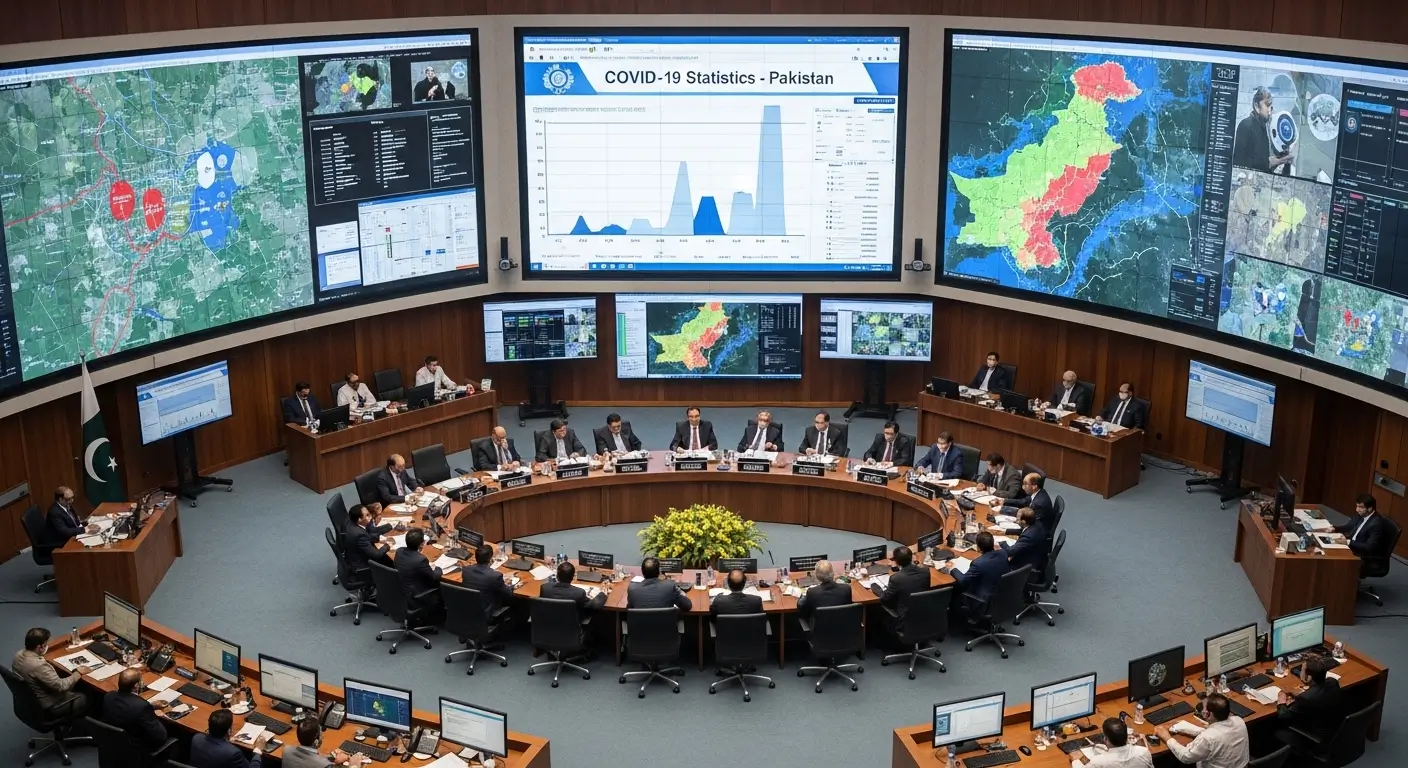
The National Command and Operation Centre emerged as Pakistan’s nerve center for managing the coronavirus pandemic. Established in March 2020, this body brought together federal and provincial authorities, military leadership, and health experts under one roof to make unified decisions about the country’s COVID-19 response.
Unlike traditional government bodies, the NCOC operated as a real-time command center, functioning seven days a week with continuous monitoring and rapid decision-making capabilities. Every NCOC meeting served as a platform where data was analyzed, strategies were formulated, and immediate actions were coordinated.
The Structure and Leadership

The NCOC operated under a clear hierarchical structure:
- Chairman: Federal Minister for Planning, Development, and Special Initiatives
- Head of NCOC: A senior military officer overseeing day-to-day operations
- Members: Representatives from all provinces, health departments, and relevant ministries
- Technical teams: Data analysts, healthcare professionals, and logistics experts
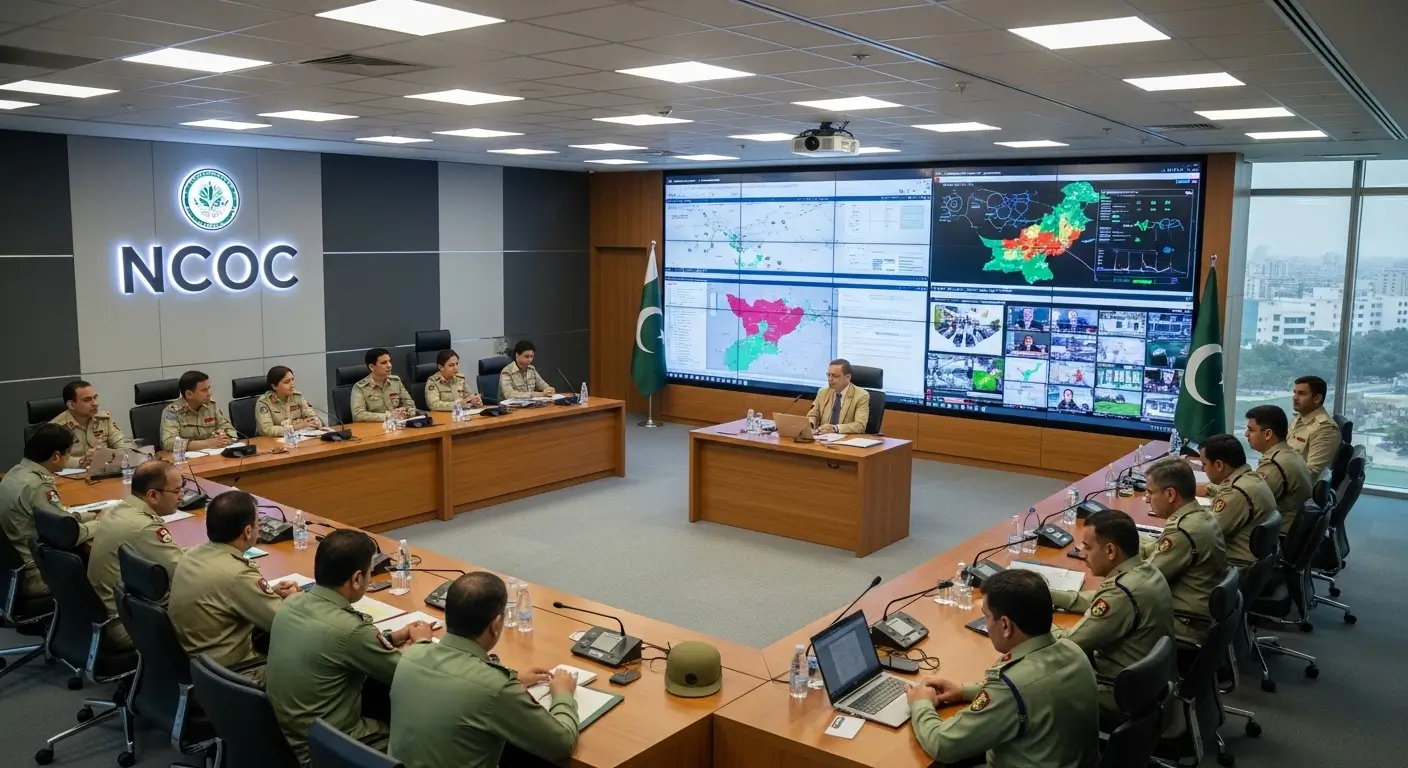
This civil-military partnership proved instrumental in ensuring decisions made during each NCOC meeting were implemented efficiently across the country.
The Purpose Behind NCOC Meetings
Every NCOC meeting had specific objectives that went beyond simple discussion. These gatherings served multiple critical functions in Pakistan’s pandemic response.
Data-Driven Decision Making
At the core of each NCOC meeting was comprehensive data analysis:
- Daily infection rates across provinces
- Hospitalization and ICU occupancy statistics
- Testing capacity and positivity rates
- Vaccination progress and distribution metrics
- Resource availability in healthcare facilities
This data-centric approach ensured that policies weren’t based on guesswork but on actual ground realities. The NCOC developed sophisticated dashboards that provided real-time insights, making each NCOC meeting a focused session on evidence-based policymaking.
Coordinating Federal and Provincial Responses
Pakistan’s federal structure meant that health decisions involved both the federal government and provincial authorities. The NCOC meeting platform created a space where:
- Punjab could share strategies that worked
- Sindh could highlight emerging challenges
- Khyber Pakhtunkhwa could discuss border management
- Balochistan could request additional resources
- Azad Kashmir and Gilgit-Baltistan could coordinate with federal plans
This coordination prevented the confusion and contradictory policies that plagued some other countries during the pandemic.
Resource Allocation and Management
A significant portion of each NCOC meeting focused on resource management:
- Distribution of personal protective equipment (PPE)
- Allocation of ventilators and oxygen supplies
- Deployment of medical personnel
- Establishment of isolation centers
- Procurement of testing kits and vaccines
The systematic approach ensured that resources reached areas with the greatest need, preventing shortages that could have been catastrophic.
Key Decisions Made in NCOC Meetings
Throughout the pandemic, various NCOC meeting sessions produced decisions that shaped Pakistan’s response strategy. These decisions affected every aspect of Pakistani life.
Lockdown Policies and Smart Lockdowns
Rather than implementing blanket lockdowns that could devastate the economy, the NCOC pioneered the concept of “smart lockdowns.” These targeted restrictions, decided during NCOC meeting sessions, focused on:
- Specific neighborhoods with high infection rates
- Individual streets or buildings with clusters
- Particular markets or commercial areas showing outbreaks
- Time-bound restrictions allowing economic activity to continue
This nuanced approach, refined through successive NCOC meeting discussions, attempted to balance public health with economic survival.
Educational Institution Policies
The question of schools and universities remained contentious throughout the pandemic. Multiple NCOC meeting sessions addressed education sector challenges:
Initial Closure Phase
- Complete shutdown in March 2020
- Transition to online learning
- Examination postponements and cancellations
Phased Reopening
- Staggered attendance schedules
- Standard operating procedures (SOPs) for institutions
- Monitoring systems for compliance
- Immediate closure protocols for outbreak cases
Each NCOC meeting reviewing education policy considered input from educational institutions, parent associations, and public health experts.
Vaccination Strategy
Perhaps the most impactful decisions from any NCOC meeting concerned vaccination rollout:
- Priority groups identification: Healthcare workers, the elderly, and vulnerable populations first
- Procurement strategy: Securing vaccines from multiple sources
- Distribution logistics: Cold chain management and delivery to remote areas
- Registration systems: Digital platforms for appointment booking
- Public awareness campaigns: Combating vaccine hesitancy
The vaccination strategy evolved through continuous refinement at each NCOC meeting based on supply availability and emerging variants.
The NCOC Meeting Format and Frequency
Understanding how these meetings operated provides insight into their effectiveness.
Daily Briefings
At the pandemic’s peak, the NCOC meeting occurred daily, featuring:
- Morning briefings on overnight developments
- Review of previous 24 hours’ statistics
- Assessment of provincial reports
- Media briefings to maintain public transparency
This daily rhythm created accountability and ensured rapid response to emerging situations.
Weekly Strategic Sessions
Beyond daily operations, weekly NCOC meeting sessions focused on broader strategy:
- Long-term planning and projections
- Resource procurement and allocation
- Policy adjustments based on trends
- International coordination and learning
- Economic impact assessments
These strategic sessions allowed for deeper analysis rather than just crisis management.
Special Emergency Meetings
When situations demanded immediate attention, emergency NCOC meeting sessions were convened:
- Sudden spike in infections requiring urgent response
- New variant detections needing assessment
- Resource shortages requiring immediate action
- Policy violations needing enforcement decisions
The flexibility to call emergency sessions proved crucial during rapidly evolving situations.
Technology and Innovation in NCOC Operations
The NCOC wasn’t just about meetings—it represented a technological leap in government crisis management.
Real-Time Monitoring Systems
The NCOC developed comprehensive tracking systems that informed every NCOC meeting:
- COVID-19 Dashboard: Public-facing platform showing real-time statistics
- Hospital Management System: Tracking bed availability and equipment
- Contact Tracing Application: Digital tools for identifying exposure chains
- Vaccination Tracking: Monitoring dose administration and coverage
These systems ensured that each NCOC meeting began with accurate, current information rather than outdated reports.
Data Analytics and Modeling
Sophisticated analytics capabilities allowed the NCOC to:
- Predict infection trends based on current trajectories
- Model the impact of policy decisions before implementation
- Identify emerging hotspots requiring intervention
- Assess the effectiveness of implemented measures
Data scientists presented these analyses at NCOC meeting sessions, enabling informed decision-making.
Challenges Faced by NCOC Meetings
Despite their effectiveness, NCOC meeting sessions faced several challenges that tested the institution’s capabilities.
Balancing Health and Economy
The most persistent tension in every NCOC meeting was reconciling public health protection with economic sustainability:
- Lockdowns saved lives but destroyed livelihoods
- Business restrictions reduced transmission but increased unemployment
- Travel limitations controlled spread but hurt tourism and trade
Finding this balance required difficult compromises discussed extensively in NCOC meeting forums.
Provincial Autonomy vs. Federal Coordination
Pakistan’s constitution grants provinces significant autonomy in health matters. Some NCOC meeting decisions faced implementation challenges when:
- Provincial governments disagreed with federal recommendations
- Local political considerations influenced compliance
- Resource distribution seemed inequitable to some provinces
- Enforcement capabilities varied across regions
The NCOC worked to build consensus rather than impose decisions, though this sometimes slowed response times.
Public Compliance and Communication
Decisions made in any NCOC meeting only mattered if the public complied. Challenges included:
- Fatigue from prolonged restrictions reducing compliance
- Misinformation undermining public health messaging
- Economic pressure forcing violations of safety protocols
- Cultural practices conflicting with social distancing guidelines
The NCOC had to continuously adapt its communication strategy to maintain public cooperation.
NCOC Meeting Success Stories
Despite challenges, several NCOC meeting initiatives demonstrated remarkable success.
Rapid Vaccination Campaign
Pakistan’s vaccination drive, orchestrated through multiple NCOC meeting sessions, achieved impressive milestones:
- Over 150 million doses administered within the first year
- Mobile vaccination units reaching remote areas
- Digital registration system processing millions of appointments
- Partnerships with private sector expanding reach
The systematic planning at each NCOC meeting made this large-scale operation possible.
Testing Capacity Expansion
Early in the pandemic, Pakistan had limited testing capability. Through decisions made at NCOC meeting sessions:
- Testing capacity expanded from hundreds to over 70,000 tests daily
- Testing centers established across all provinces
- Drive-through testing facilities created
- Free testing made available for symptomatic individuals
This expansion allowed for better disease surveillance and targeted interventions.
Hospital System Strengthening
The NCOC meeting focus on healthcare infrastructure led to:
- Creation of dedicated COVID-19 facilities
- Training programs for healthcare workers
- Procurement of medical equipment and supplies
- Establishment of tele-health services
- Mental health support for medical professionals
These improvements benefited the broader healthcare system beyond just COVID-19 response.
International Recognition and Learning
The NCOC model attracted international attention, with several aspects of NCOC meeting operations studied by other countries.
WHO Acknowledgment
The World Health Organization recognized Pakistan’s response, particularly:
- The coordinated approach through NCOC meetings
- Smart lockdown strategy preventing economic collapse
- Effective contact tracing mechanisms
- Vaccination campaign organization
This recognition validated the NCOC meeting approach as an effective crisis management model.
Regional Collaboration
Pakistan shared its NCOC experience with neighboring countries through:
- Virtual exchanges with regional health officials
- Documentation of best practices from NCOC meeting decisions
- Technical assistance in establishing similar command centers
- Coordinated border management strategies
Evolution Beyond COVID-19
As the acute pandemic phase subsided, questions arose about the NCOC’s future role and whether the NCOC meeting model could address other challenges.
Expansion to Other Crises
The success of the NCOC meeting approach suggested applications for:
- Natural disaster management: Earthquakes, floods, and droughts
- Disease surveillance: Monitoring endemic diseases like dengue or polio
- Food security: Coordinating responses to agricultural crises
- Water management: Addressing scarcity and distribution issues
The infrastructure, personnel, and coordination mechanisms developed through NCOC meeting operations could adapt to various national challenges.
Institutional Legacy
Even as COVID-19 became endemic, the NCOC left lasting impacts:
- Data systems that continue monitoring health trends
- Coordination mechanisms between federal and provincial governments
- Crisis management protocols applicable to future emergencies
- Public communication channels for health awareness
The NCOC meeting model demonstrated that effective governance requires coordination, data-driven decisions, and rapid response capabilities.
Lessons from NCOC Meeting Operations
Reflecting on the NCOC experience provides valuable insights for crisis management.
Importance of Unified Command
The NCOC meeting structure showed that fragmented responses fail during crises. Centralized coordination while respecting federal structures proved effective.
Data as Foundation for Policy
Every successful NCOC meeting decision relied on accurate, timely data. Investment in information systems pays dividends during emergencies.
Flexibility and Adaptation
The NCOC continuously adjusted policies based on results. Rigid adherence to initial plans without learning would have been disastrous.
Communication Transparency
Regular public briefings from NCOC meeting sessions built trust even when delivering difficult messages. Transparency strengthened public cooperation.
Conclusion
The NCOC meeting became more than a bureaucratic process—it represented Pakistan’s institutional response to an unprecedented global crisis. These meetings served as the crucible where difficult decisions were made, resources were allocated, and strategies were refined based on evolving circumstances.
The success of the NCOC model demonstrated that effective governance during crises requires several elements: strong leadership, civil-military cooperation, federal-provincial coordination, data-driven decision-making, and transparent communication.
Each NCOC meeting embodied these principles, creating a system that, while imperfect, successfully navigated Pakistan through the most challenging public health crisis in a century.
As countries worldwide evaluate their pandemic responses, Pakistan’s NCOC stands as a noteworthy example of adaptive governance. The NCOC meeting structure—bringing together diverse stakeholders for focused, data-informed decision-making—offers a template applicable beyond health crises to any situation requiring coordinated national response.