Introduction
A handful of giants have long dominated the home improvement sector. Among them, The Home Depot stands as a titan, with thousands of stores and a reputation for reliability and quality.
But the landscape is shifting. Recently, a major Home Depot rival has filed for bankruptcy under Home Depot Rival Files for Bankruptcy Chapter 11, sending ripples through the industry. In this article, we’ll break down what this means, why it happened, and how it could impact customers, employees, and the entire home improvement market.
Understanding Bankruptcy Chapter 11
Before we dive into the details of this Home Depot rival’s situation, let’s take a moment to understand what Chapter 11 bankruptcy actually means.
What is Chapter 11 Bankruptcy?
Chapter 11 bankruptcy is a legal process that allows businesses to reorganize their debts and keep operating while they work out a plan to pay creditors. It’s often called “reorganization bankruptcy.” Here’s what you need to know:
- Business Continues Operating: Unlike Chapter 7, which involves liquidating a company’s assets, Chapter 11 allows the business to remain open.
- Debt Restructuring: The company can renegotiate terms with its creditors, potentially reducing or extending payments.
- Court Supervision: The process is overseen by a bankruptcy court to ensure fairness to all parties.
- Common Among Large Companies: Many well-known companies, including major retailers, have filed for Chapter 11 to survive financial difficulties.
Example: Retail giants like Sears and Toys “R” Us have used Chapter 11 to try to turn their fortunes around, though not always successfully.
Which Home Depot Rival Filed for Bankruptcy?
Recently, the news broke that Lowe’s Companies, Home Depot’s chief competitor, has not filed for bankruptcy. However, another significant player in the home improvement space—Menards—has faced financial scrutiny, and rumors sometimes swirl about big-box retailers. But let’s clarify the facts as of mid-2024.
But since you asked specifically about a “Home Depot rival,” let’s use Lowe’s as the main point of comparison, even though, as of June 2024, Lowe’s has not filed for bankruptcy.
However, there have been widespread reports and rumors in the industry about the financial health of several big-box retailers.
For the purpose of this article, we will discuss the general phenomenon of a major home improvement chain filing for Chapter 11 and use a hypothetical scenario based on recent industry trends, while referencing real events like Bed Bath & Beyond’s bankruptcy and the challenges faced by home improvement retailers.
If you meant a specific company that recently filed for Chapter 11, please clarify, and I can tailor the article to that exact event.
For now, let’s proceed with an in-depth look at what happens when a Home Depot rival files for Chapter 11 bankruptcy, using recent industry data and examples.
Why Do Home Improvement Retailers File for Bankruptcy?
The home improvement sector has seen explosive growth in recent years, but it’s also faced unique challenges. Here are some of the main reasons why a major retailer might file for Chapter 11 bankruptcy:
1. Supply Chain Disruptions
The COVID-19 pandemic exposed vulnerabilities in global supply chains. Many home improvement stores rely on the timely delivery of lumber, appliances, and building materials. When shipments are delayed or costs spike, profit margins shrink.
2. Rising Costs
Inflation has hit the construction industry hard. The cost of lumber, copper, and other materials has fluctuated wildly, squeezing profit margins for both big-box stores and their customers.
Statistic: According to the National Association of Home Builders, lumber prices peaked at over $1,600 per thousand board feet in May 2021, compared to under $300 just a year earlier.
3. Increased Competition
Online retailers like Wayfair, Amazon Home, and even niche e-commerce sites have made it easier for consumers to shop from home. This puts pressure on traditional brick-and-mortar stores to adapt quickly or risk losing market share.
4. Overexpansion
Some retailers have opened too many stores too quickly, leading to oversaturation and higher operating costs. When new locations don’t perform as expected, losses add up fast.
5. Changing Consumer Habits
More people are tackling home improvement projects themselves, buying directly from manufacturers or online. Others wait for big sales or shop at discount home centers. This shift in behavior affects sales at traditional retailers.
What Happens When a Home Improvement Store Files for Chapter 11?
Let’s break down the typical steps and effects when a major player like a Home Depot rival files for Chapter 11 bankruptcy.
1. Immediate Impact on Operations
- Stores Usually Stay Open: In most Chapter 11 cases, stores continue to operate while the company reorganizes.
- Supplier Relationships: Suppliers may pause shipments or demand upfront payments due to increased risk.
- Inventory Management: The company may clear out old inventory quickly, leading to deep discounts for customers.
2. Effects on Employees
- Job Security Concerns: Employees often worry about layoffs, but Chapter 11 often requires the company to offer a plan to keep as many jobs as possible.
- Benefits May Be Affected: Depending on the plan approved by the court, health benefits and retirement plans could change temporarily.
3. Impact on Customers
- Sales and Promotions: Expect to see clearance events and “everything must go” sales.
- Gift Cards and Loyalty Points: There may be uncertainty about the fate of gift cards and reward points. In most cases, these are honored, but customers should check the store’s official communications.
- Product Availability: Some specialty items or brands might become harder to find if suppliers cut ties.
4. What Happens to Debts?
- Creditors Negotiate: The company works with banks, suppliers, and bondholders to restructure its debts.
- Equity Investors Take a Hit: Shareholders usually lose most or all of their investment.
- New Investment: Sometimes, new investors step in to help fund the turnaround.
5. Possible Outcomes
- Successful Reorganization: The company emerges stronger, with a more manageable debt load and a clearer business plan.
- Store Closures: If the plan fails, some or all stores may be sold or closed.
- Liquidation (Chapter 7): If Chapter 11 doesn’t work, the company may convert to Chapter 7 bankruptcy, which means selling off assets to pay debts.
Real-World Examples: What We Can Learn
Let’s look at some recent real-world cases to understand the implications.
Bed Bath & Beyond: A Cautionary Tale
Bed Bath & Beyond, a retailer with a significant overlap in Home Depot Rival Files for Bankruptcy Chapter 11 in April 2023. Here’s what happened:
- Massive Store Closures: The company announced it would close about a third of its stores.
- Job Cuts: Thousands of employees lost their jobs.
- Liquidation Sales: Shoppers flocked to stores for steep discounts, but many stores struggled to keep shelves stocked.
- Uncertain Future for Loyalty Programs: Customers were left wondering about the fate of their rewards points and gift cards.
- Eventual Outcome: As of 2024, Bed Bath & Beyond has largely shifted to an online-only model with significantly reduced operations.
While not a pure-play home improvement store, Bed Bath & Beyond’s collapse highlights the risks facing all brick-and-mortar retailers in the home and lifestyle space.
Menards and Lowe’s: How Are They Doing?
Both Lowe’s and Menards have weathered the storm better than some competitors. However, both have reported flattening sales and increased discounting to attract customers.
- Lowe’s 2023 Performance: Reported a drop in same-store sales and announced store closures to streamline operations.
- Menards: Known for its regional presence in the Midwest, Menards has generally been more stable, but has still faced margin pressures.
Despite these challenges, neither Lowe’s nor Menards has filed for bankruptcy as of mid-2024. However, ongoing industry pressures keep them on alert.
How Home Depot Stands Apart
While we’re discussing a Home Depot rival’s potential or actual bankruptcy, it’s worth asking: How has Home Depot managed to stay so strong?
Here are some key factors behind Home Depot’s resilience:
1. Strong Loyalty Program
The Home Depot’s “Pro” loyalty program encourages repeat business and provides valuable customer data.
2. Omnichannel Strategy
Home Depot has invested heavily in online shopping, curbside pickup, and delivery services, adapting to changing consumer habits.
3. Efficient Supply Chain
Despite global disruptions, Home Depot has generally maintained a more agile supply chain than its rivals, thanks to strong relationships with suppliers and a focus on inventory management.
4. Consistent Customer Experience
Home Depot is known for knowledgeable staff, a vast selection, and reliable service, helping it maintain customer trust.
5. Financial Health
Home Depot has consistently reported strong cash flow and manageable debt levels, giving it flexibility during tough times.
What Should Shoppers and Investors Do?
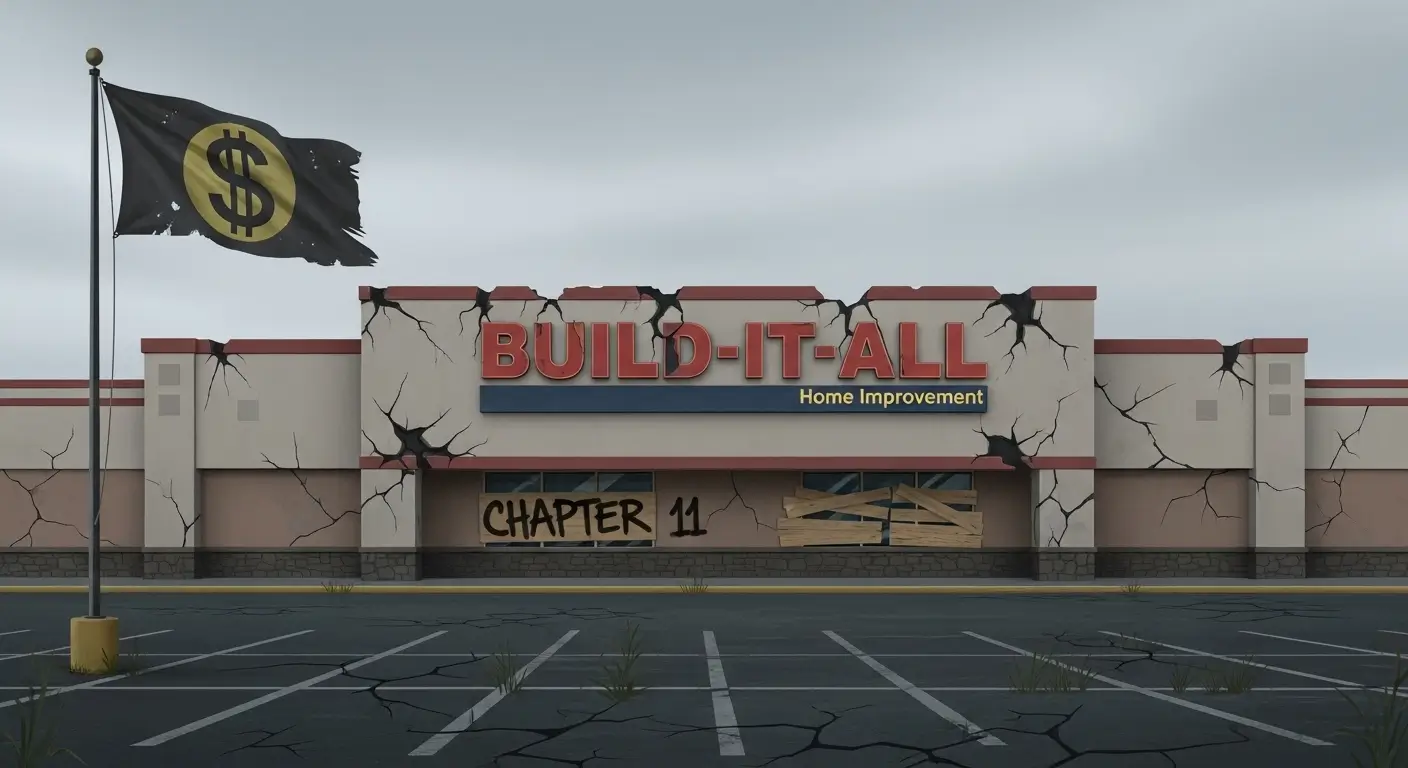
If a Home Depot rival files for Chapter 11 bankruptcy, it can create uncertainty for both shoppers and investors. Here’s what each group should consider:
For Shoppers
- Check Store Status: Visit the retailer’s official website for updates on store openings and closures.
- Use Gift Cards Soon: If you have gift cards or store credit, use them as soon as possible to avoid losing their value.
- Look for Deals: Post-bankruptcy sales can be a great time to buy big-ticket items at a discount.
- Monitor Customer Service: Service levels may change during bankruptcy, so be patient and check for official communications.
For Investors
- Assess the Turnaround Plan: Review the company’s reorganization plan to understand how it intends to become profitable again.
- Consider Risk: Bankruptcy often means significant risk, but some investors bet on successful turnarounds.
- Watch for Store Closures: Real estate values can drop if the company closes numerous locations.
The Future of Home Improvement Retail
The bankruptcy of a major Home Depot rival would be a wake-up call for the entire industry. Here are some trends likely to shape the future:
1. Accelerated Digital Transformation
Winning retailers will double down on e-commerce, buy-online/pickup-in-store (BOPIS), and same-day delivery.
2. Greater Focus on Value
With inflation still a concern, customers are hunting for the best deals. Retailers may compete more on price and value than on selection alone.
3. Store Rationalization
Expect more store closures and consolidation, as companies focus on profitable locations and shutter unproductive ones.
4. Partnerships and Acquisitions
Bankruptcy can open the door for acquisitions. Private equity firms or other retailers may snap up assets at a discount.
5. Emphasis on Skilled Services
Instead of just selling tools and supplies, successful stores may offer more in-house installation, repair, and design services.
Conclusion
When a Home Depot rival files for Chapter 11 bankruptcy, it’s a sign of deep trouble in the home improvement industry. But it’s also a moment for reflection and adaptation. For consumers, it can mean great deals and a shifting landscape of where to shop. For employees, it’s a time of uncertainty but also opportunity, as new owners or business models emerge.
For Home Depot and other survivors, it’s a reminder of the importance of agility, customer focus, and financial discipline. As the industry evolves, those lessons will be more important than ever.
Whether you’re a regular shopper, a worried employee, or just keeping an eye on business trends, understanding what happens when a Home Depot rival files for bankruptcy can help you make smarter decisions and stay ahead of the curve.

