
Introduction
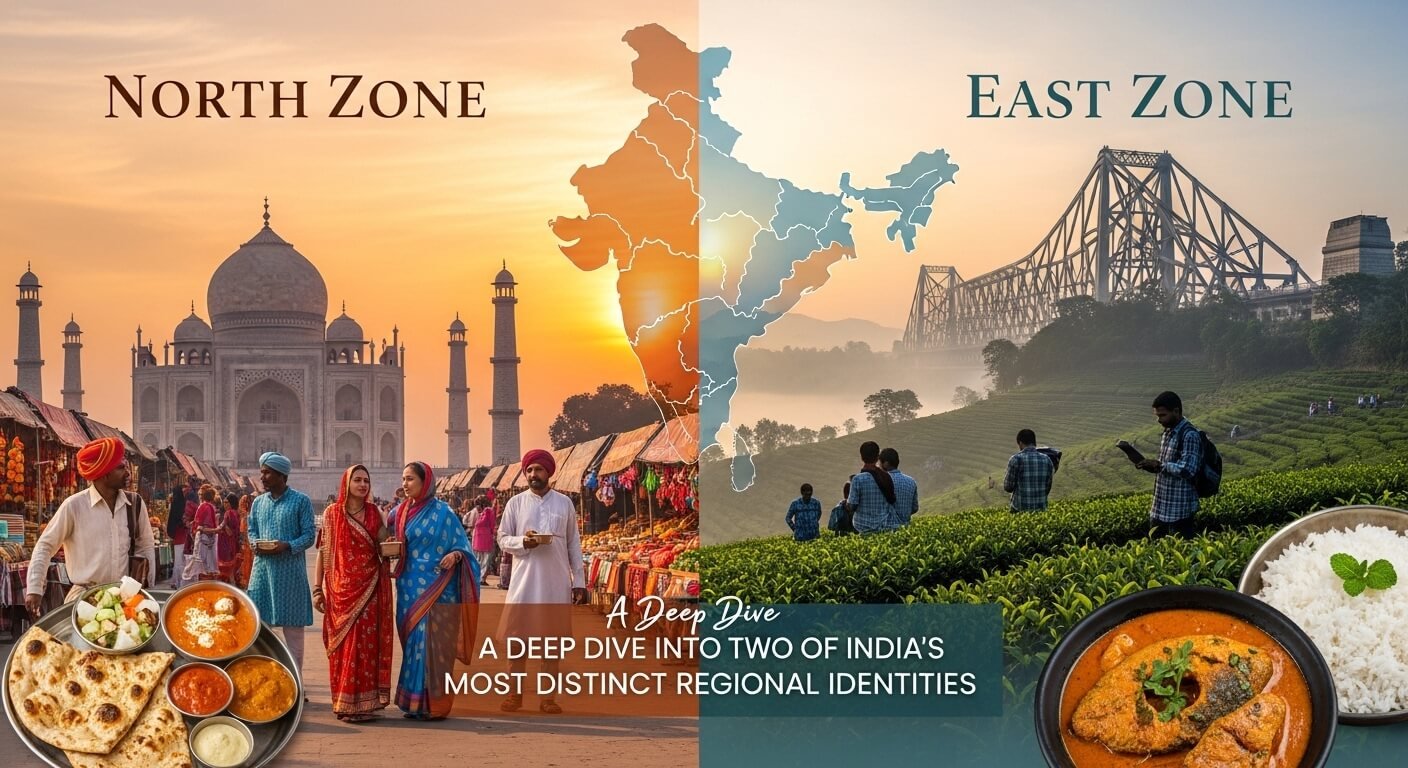
India is a country of contrasts. Its sheer size means that the differences between regions aren’t just geographical — they span culture, food, language, climate, history, and even temperament. Few comparisons capture this diversity more vividly than north zone vs east zone.
These two zones represent very different sides of India. The north zone is often what comes to mind when people picture India on the world stage — the Himalayas, the plains of the Ganges, the historical capitals, the loud festivals. The east zone, by contrast, is quieter in reputation but no less remarkable — a region of rivers, rainforests, deep intellectual heritage, and some of the country’s most breathtaking natural landscapes.
Whether you’re curious about the cultural divide, planning a trip, exploring regional cricket rivalries, or simply want to understand how two neighboring zones can feel so entirely different, this guide breaks it all down in detail.
Understanding the Zones: What Do They Cover?
Before diving into the north zone vs east zone comparison, it helps to know exactly which states fall under each.
The North Zone
The north zone, as defined by the Zonal Council of India, includes:
- Jammu & Kashmir / Ladakh
- Himachal Pradesh
- Punjab
- Haryana
- Rajasthan
- Delhi (the national capital territory)
- Uttarakhand
This zone covers a dramatic range of terrain — from the arid deserts of Rajasthan to the snow-capped peaks of the Himalayas, from the agricultural heartland of Punjab and Haryana to the bustling urban sprawl of Delhi.
The East Zone
The east zone covers:
- West Bengal
- Odisha
- Bihar
- Jharkhand
This zone is defined by its river systems — the Ganges, the Brahmaputra delta, the Mahanadi — and its position as the cultural and intellectual heart of the Indian independence movement. Bengal gave India its Nobel laureate literature, Bihar gave it the Buddha, and the region as a whole carries a weight of history that’s hard to overstate.
Geography: Mountains and Plains vs Rivers and Coasts
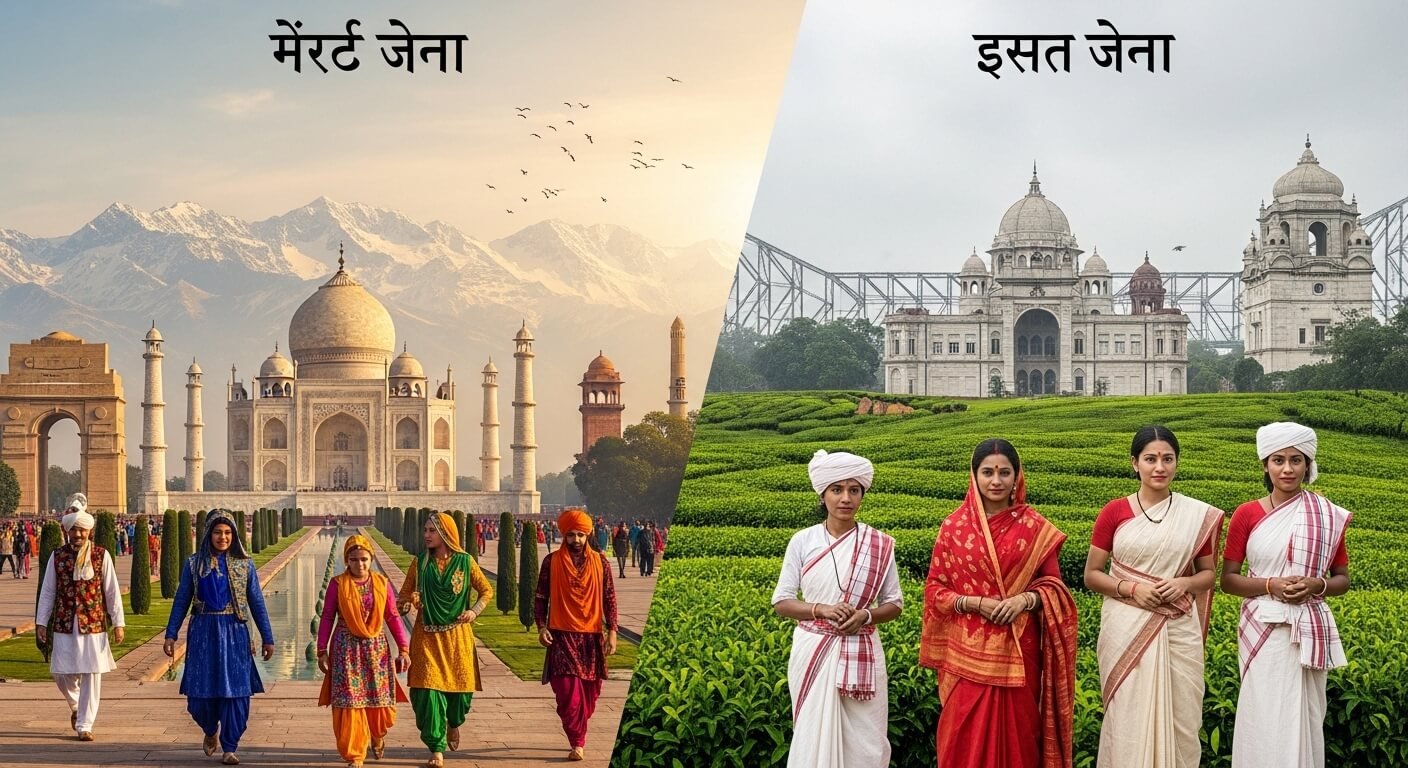
The geographic contrast in the north zone vs east zone debate is one of the most striking starting points.
North Zone Geography
The north zone is arguably the most geographically dramatic region in the country. It contains:
- The Western Himalayas — some of the highest peaks on Earth, including sections bordering Tibet and Pakistan
- The Thar Desert in Rajasthan, one of the world’s largest hot deserts, covering over 200,000 square kilometers
- The Indo-Gangetic Plain — the fertile flatlands of Punjab, Haryana, and UP’s borders, often called India’s breadbasket
- The Shivalik Hills and foothills of Uttarakhand and Himachal
The climate varies enormously within the north zone alone. Rajasthan bakes under 50°C summer heat, while Ladakh experiences brutal Himalayan winters where temperatures can plunge to -30°C. This diversity is part of what makes the north zone such a complex and fascinating region.
East Zone Geography
The east zone is defined by water. It sits at the convergence of some of the subcontinent’s most powerful river systems:
- The Ganges delta — shared with Bangladesh, this is one of the largest river deltas on the planet
- The Bay of Bengal coastline along Odisha, including stunning beach stretches like Puri and Chandipur
- The Chotanagpur Plateau in Jharkhand, a mineral-rich highland that has shaped the region’s industrial identity
- The Sundarban mangrove forests in West Bengal — a UNESCO World Heritage Site and one of the last habitats of the Bengal tiger
The east zone is generally more humid, with heavy monsoon rainfall that sustains agriculture and shapes daily life. Cyclones from the Bay of Bengal are a recurring feature of life in West Bengal and Odisha — a challenge that the region has learned to live with over centuries.
Climate: Dry Heat vs Monsoon Humidity
Climate plays a huge role in shaping culture, lifestyle, and even food — and in the north zone vs east zone comparison, the difference is dramatic.
North Zone Climate
The north zone experiences the classic continental-influenced Indian climate: extreme summers, cold winters, and a monsoon season that’s impactful but not as prolonged as what the east receives.
- Delhi records summer temperatures exceeding 45°C, with winters occasionally dropping near freezing
- Rajasthan’s desert districts see some of the hottest temperatures recorded in Asia
- Himachal Pradesh and Uttarakhand are cooler year-round, with heavy snowfall in winter months
- The monsoon arrives in the north typically in July, later than most of the country
East Zone Climate
The east zone is significantly more humid. The Bay of Bengal’s influence means:
- Kolkata experiences intense humidity during the monsoon season, with rainfall averaging over 1,600mm annually
- Odisha’s coast is one of the most cyclone-prone regions in the world — the 1999 Odisha Super Cyclone remains one of the deadliest natural disasters in Indian history
- Bihar and Jharkhand are hot and humid in summer with less extreme winters than the north
- The monsoon arrives earlier in the east, typically in June, and stays longer
Culture and Heritage: Grand Durbar vs Deep Intellectual Tradition
Culture may be where the north zone vs east zone divide is most profound — and most fascinating.
North Zone Culture
The north zone is the cradle of much of India’s most recognizable cultural imagery. Think of:
- The Mughal legacy — the Taj Mahal, Red Fort, Qutub Minar, and the architectural grandeur that defines India’s global image
- Punjabi culture — vibrant, energetic, rooted in Sikh traditions, with Bhangra music and dance that has spread worldwide
- Rajasthani heritage — a warrior-king history, magnificent forts and palaces, intricate miniature paintings, and folk music traditions like Manganiyar and Langas
- Holi and Diwali celebrations — the north zone is where these festivals are celebrated with the greatest intensity, particularly in places like Mathura, Vrindavan, and Amritsar
The north zone’s culture tends toward the bold and expressive. Colors are vivid, festivals are loud and communal, and hospitality is effusive.
East Zone Culture
The east zone carries a different kind of cultural weight — deeper, more introspective, and tied to an intellectual tradition that shaped modern India.
- Bengal Renaissance — the 19th-century intellectual revolution centered in Kolkata produced figures like Rabindranath Tagore (Asia’s first Nobel laureate in Literature, 1913), Ram Mohan Roy, Swami Vivekananda, and Subhas Chandra Bose
- Classical music and dance — Rabindra Sangeet is a complete musical tradition in itself; Odissi dance from Odisha is one of India’s eight classical dance forms
- Durga Puja — West Bengal’s most important festival is not just a religious event but an arts and culture phenomenon, now recognized by UNESCO as an Intangible Cultural Heritage of Humanity
- Buddhist heritage — Bihar is home to Bodh Gaya (where the Buddha attained enlightenment), Nalanda (site of one of the world’s earliest universities), and Rajgir — collectively making it one of the most significant Buddhist pilgrimage regions on Earth
The east zone’s cultural character leans toward refinement, literary depth, and a certain intellectual pride that is a defining trait of Bengali identity in particular.
Food: Butter and Spice vs Mustard and Sweets
The food contrast in north zone vs east zone tells you everything about how differently these regions experience daily life.
North Zone Food
North Indian cuisine is what most of the world knows as “Indian food” — rich, hearty, dairy-forward, and deeply spiced:
- Punjab is the home of butter chicken, dal makhani, sarson ka saag, and makki ki roti — dishes built around cream, butter, and the tandoor oven
- Rajasthan has its own distinct cuisine shaped by desert conditions — dal baati churma, laal maas, and ker sangri are products of an environment where water and fresh vegetables were historically scarce
- Delhi as a culinary melting pot brings together influences from across the subcontinent, with its street food scene — chaat, paranthe, kebabs — being world-renowned
- Breads are central to north zone meals: roti, naan, parantha, and kulcha dominate the table
East Zone Food
East zone cuisine is a revelation for anyone who discovers it. It’s lighter than north Indian food, built on mustard oil and panch phoron (a five-spice blend), with rice as the absolute staple:
- Bengali cuisine is considered one of India’s most sophisticated — dishes like macher jhol (fish curry), hilsa preparations, chingri malai curry (prawn in coconut milk), and shorshe ilish are legendary among food lovers
- Sweets are a Bengali obsession — rasgulla, mishti doi, sandesh, chomchom, and rosogolla are not just desserts but cultural institutions. Notably, Odisha has a competing claim to rasgulla that sparked a serious geographical indication dispute
- Odia cuisine — lighter and more restrained than Bengali, with a strong temple food tradition (the Jagannath Temple at Puri feeds thousands daily with its mahaprasad)
- Bihar’s litti chokha — roasted wheat balls with a spiced stuffing, eaten with roasted eggplant — is one of India’s most underrated comfort foods
Economy: Agricultural Power vs Industrial and Emerging Growth
The economic profile of these two zones is strikingly different, and the gap has significant implications for development, migration, and opportunity.
North Zone Economy
- Punjab and Haryana are India’s agricultural engines — the Green Revolution of the 1960s and 70s transformed these states into the country’s primary grain producers, and they continue to supply a significant portion of India’s wheat and rice
- Delhi is one of India’s top economic centers, home to corporate headquarters, government institutions, and a booming service sector
- Rajasthan has growing tourism, mining, and handicraft industries, and is emerging as a significant center for solar energy due to its vast desert landscape
- The north zone benefits from strong connectivity infrastructure — the Delhi-Mumbai and Delhi-Kolkata railway and highway corridors are economic lifelines
East Zone Economy
- West Bengal was India’s industrial center for much of the 20th century, with Kolkata serving as the country’s commercial capital under British rule. The state has been working to reclaim economic momentum in recent decades
- Jharkhand sits on some of India’s richest mineral deposits — coal, iron ore, copper, mica — making it central to the country’s mining and steel industries
- Odisha has transformed significantly in recent years, attracting major industrial investment in steel, aluminum, and port infrastructure. Paradip Port is one of India’s most active
- Bihar remains one of India’s lower-income states by per capita measures, but has shown strong growth rates in recent years and benefits from a large, young population and an intensifying focus on infrastructure investment
Cricket: The North Zone vs East Zone Rivalry
In India, cricket is a culture, and the north zone vs east zone comparison has a very specific meaning in the sport’s domestic structure.
The Duleep Trophy and other domestic zonal competitions have long featured north zone vs east zone matchups that draw serious attention from selectors and fans alike. The north zone has historically produced some of India’s most celebrated cricketers — think Kapil Dev (Haryana), Virender Sehwag (Delhi), Yuvraj Singh (Punjab), and more recently, Rishabh Pant (Uttarakhand) and Shubman Gill (Punjab).
The east zone has its own storied cricketing tradition. West Bengal has produced cricketers like Sourav Ganguly — one of India’s greatest captains and arguably the man most responsible for transforming Indian cricket into the aggressive, confident force it became in the 2000s. Bihar, Jharkhand, and Odisha have also contributed significant talent to Indian cricket over the decades.
When North Zone vs East Zone matches happen in domestic competition, they carry the weight of regional pride that makes Indian domestic cricket so compelling to follow.
Tourism: Ancient Forts and Deserts vs Temples and Tigers
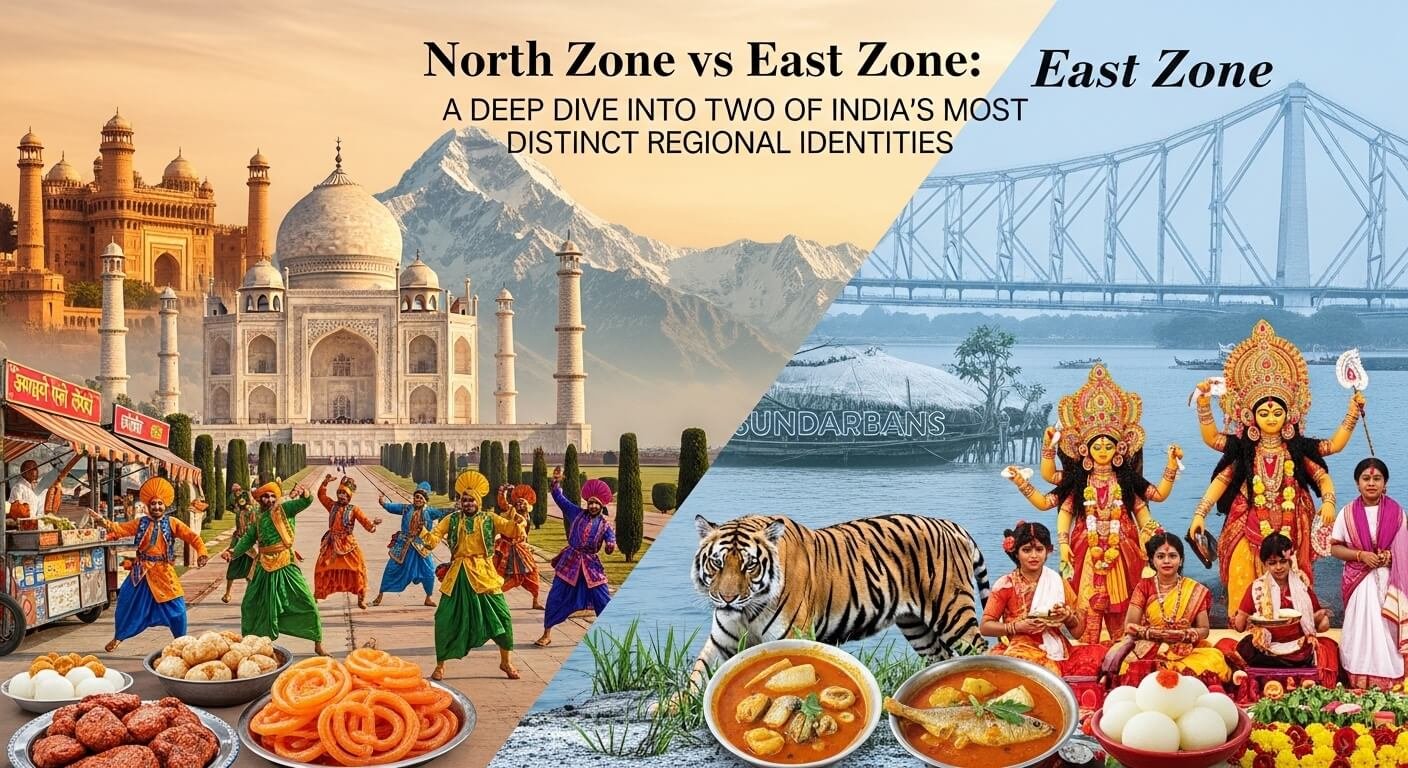
Both zones offer world-class tourism, but the experiences are radically different.
North Zone Tourism Highlights
- Rajasthan — Jaipur’s Amber Fort, Jodhpur’s Mehrangarh, Jaisalmer’s desert camps, Udaipur’s lake palaces
- Himachal Pradesh — Shimla, Manali, Spiti Valley, Dharamshala (the Dalai Lama’s residence in exile)
- Uttarakhand — Rishikesh, Haridwar, the Char Dham pilgrimage circuit, Jim Corbett National Park
- Ladakh — One of the world’s most dramatic landscapes, increasingly popular with adventure travelers and motorcyclists
- Delhi — World Heritage Sites including Humayun’s Tomb, Qutub Minar, and Red Fort
East Zone Tourism Highlights
- West Bengal — Darjeeling’s tea gardens and Himalayan views, the Sundarbans, Kolkata’s colonial architecture and cultural depth
- Odisha — The Konark Sun Temple (a UNESCO World Heritage Site), Puri’s Jagannath Temple, Chilika Lake (Asia’s largest coastal lagoon), pristine beaches
- Bihar — Bodh Gaya, Nalanda ruins, Rajgir, Vaishali — a pilgrimage circuit of extraordinary historical depth
- Jharkhand — Betla National Park, Dassam Falls, the tribal cultural heritage of Ranchi
Language and Literature
Language is where the identity of each zone is perhaps most powerfully expressed.
North Zone Languages
Hindi in its various forms dominates the north zone — but there’s more nuance than that suggests. Punjabi, with its Gurmukhi script and rich literary tradition, is the primary language of Punjab. Rajasthan has its own distinct dialects. Kashmiri, Dogri, and Ladakhi represent the linguistic diversity of the far north.
East Zone Languages
Bengali is one of the world’s major languages — spoken by over 230 million people globally, it’s the world’s sixth or seventh most spoken language by native speakers. Its literary tradition is extraordinary, from medieval poetry to the modern literary giants of the Bengal Renaissance. Odia has a literary history stretching back over a thousand years. Maithili, spoken in Bihar, was one of the first languages to receive recognition under India’s Eighth Schedule.
Final Thoughts
The north zone vs east zone comparison isn’t about which is better — it’s about understanding how extraordinarily diverse a single country can be. These two zones share a national identity but express it through entirely different lenses of history, climate, food, language, and culture.
The north zone dazzles with scale and spectacle — deserts, mountains, Mughal grandeur, and the roar of its festivals. The east zone runs deeper — its rivers, its literature, its temples, and its intellectual tradition form a layer of Indian identity that rewards slow, curious exploration.